
ES · EN
Contact us
Detection of incidents at collection points
Cameras on the vehicle that already drives around the city, or the fixed cameras you already have, to detect and classify waste left outside containers, overflows and bulky items, and alert the control centre.
The Seevia Waste camera on the roof rack flags containers and a box left beside them.
Our own building block that brings together on-board perception, anonymisation and analytics, adapted to each contract.
Incidents at collection points, such as waste left outside the container, overflows or dumped bulky items, are found out late, usually through a citizen complaint. Seevia Waste detects them during the service vehicle's route or from fixed cameras, classifies them and places them on the map.
Each alert reaches the centre with place, time and image, and the right service for each type of waste goes out.
The kit is fitted on service vehicles or uses the fixed cameras you already have, along the usual routes.
People and number plates are blurred on board, before the alert leaves the vehicle.
Illustrative diagram
5 h → 2 h
faster response to waste on the street
01
Cameras and GNSS position on a mount fitted on top of the service vehicle.
The kit sits on the roof rack of a service vehicle.
02
Waste outside the container and overflows, classified on board by type of waste.
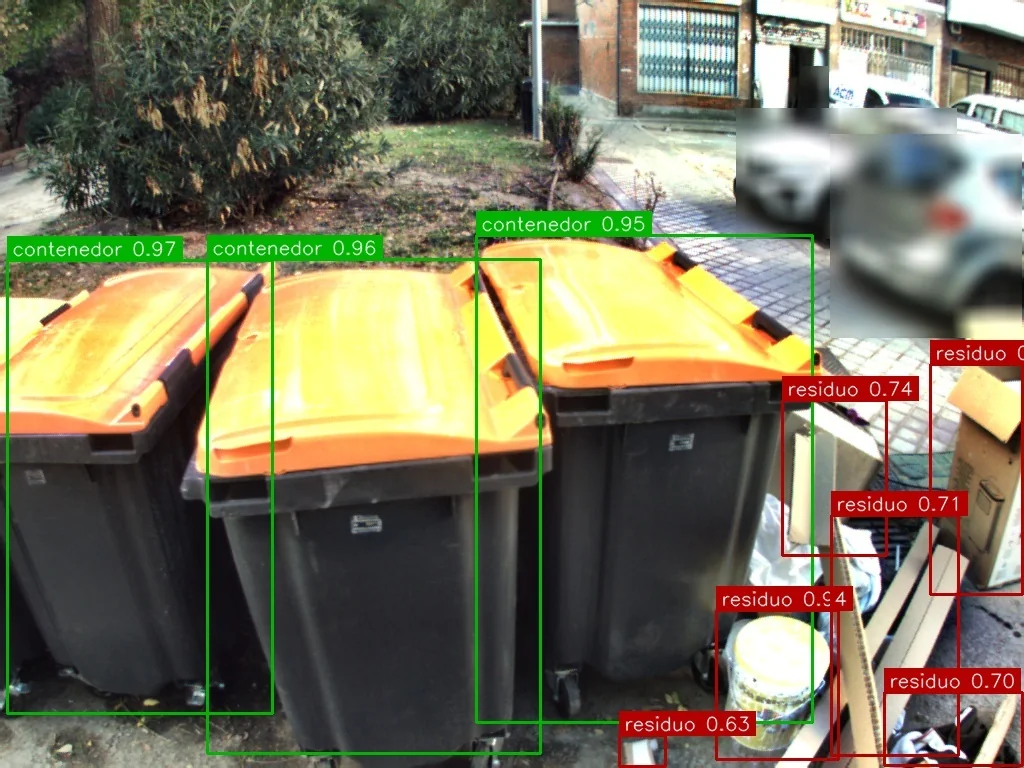
Waste next to the containers, detected on board.
03
People and number plates are blurred inside the vehicle, before any analysis.
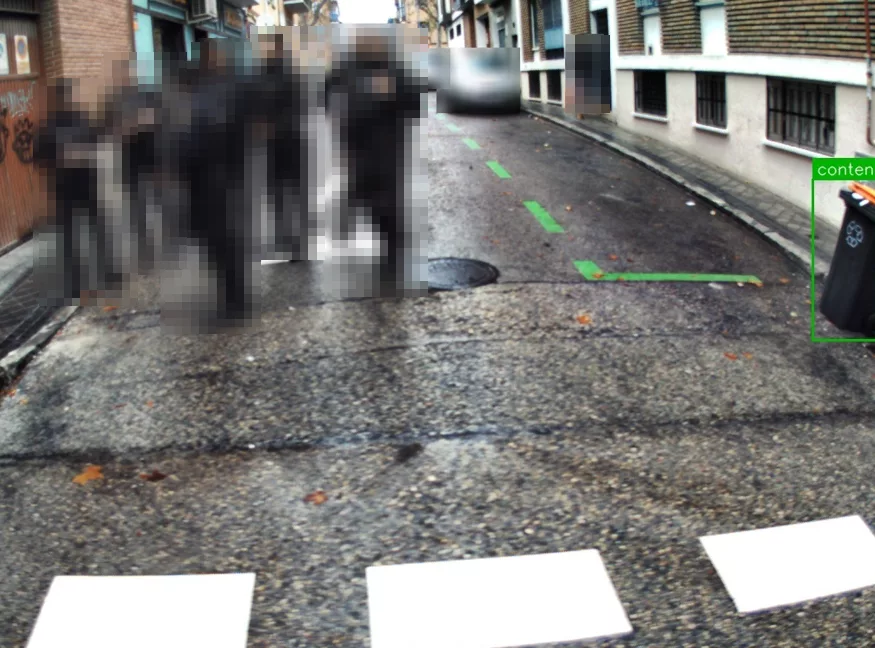
Container detected; pedestrians anonymised before anything leaves the vehicle.
04
Each alert reaches the centre with place, time and a cropped image.
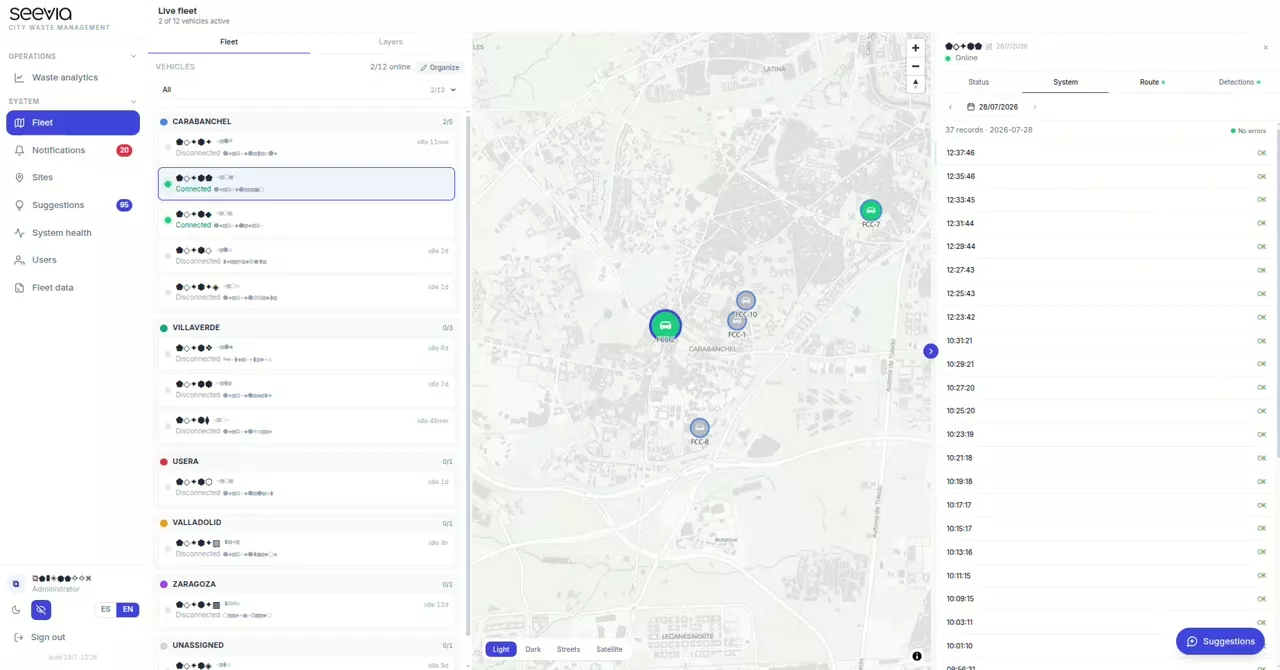
Each alert, on the management app's map.
In each project we choose and mount the equipment the case needs. These are the elements we work with.
Cameras, GNSS positioning, mobile connectivity and an on-board computer in our own enclosure, powered by the vehicle.
Cameras over collection points, new ones or those you already have, with local processing.
Continuous, 24 hours a day, processing on board.
It alerts to waste left outside the container and to overflows, and classifies it by type of waste. Each service decides which types are detected.
No. The kit is fitted to vehicles that already run the route, or existing fixed cameras are used.
People and vehicles are anonymised inside the device itself; only anonymised alerts reach the control centre.
Yes. Alerts reach the system the service already uses, adapted to the way it works.
Tell us your case and we will look at it with your data.
Next
Seevia Horus