
ES · EN
Contact us
Anonymise on board
A street camera sees people even if you only count containers. We anonymise inside the device, before storing or sending, so only useful data leaves. It is privacy by design: if an alert or a number is enough, no raw video is sent.
Both side cameras on the route: people and plates are already blurred.
We blur people and vehicles inside the device that captures the image, so the unblurred version never leaves it. If a georeferenced alert is enough, we send that. If metadata is enough, we send that. Never raw video.
A camera unintentionally collects personal data. Moving it to the cloud multiplies risks, transmission costs and surveillance, and requires GDPR compliance.
Illustrative diagram
01
A model locates pedestrians and cars in the image.
02
They are blurred on board; no raw capture is stored, only the alert.
03
The alert leaves anonymised and encrypted with a client key.
04
Data-protection report and an information sign on public roads.
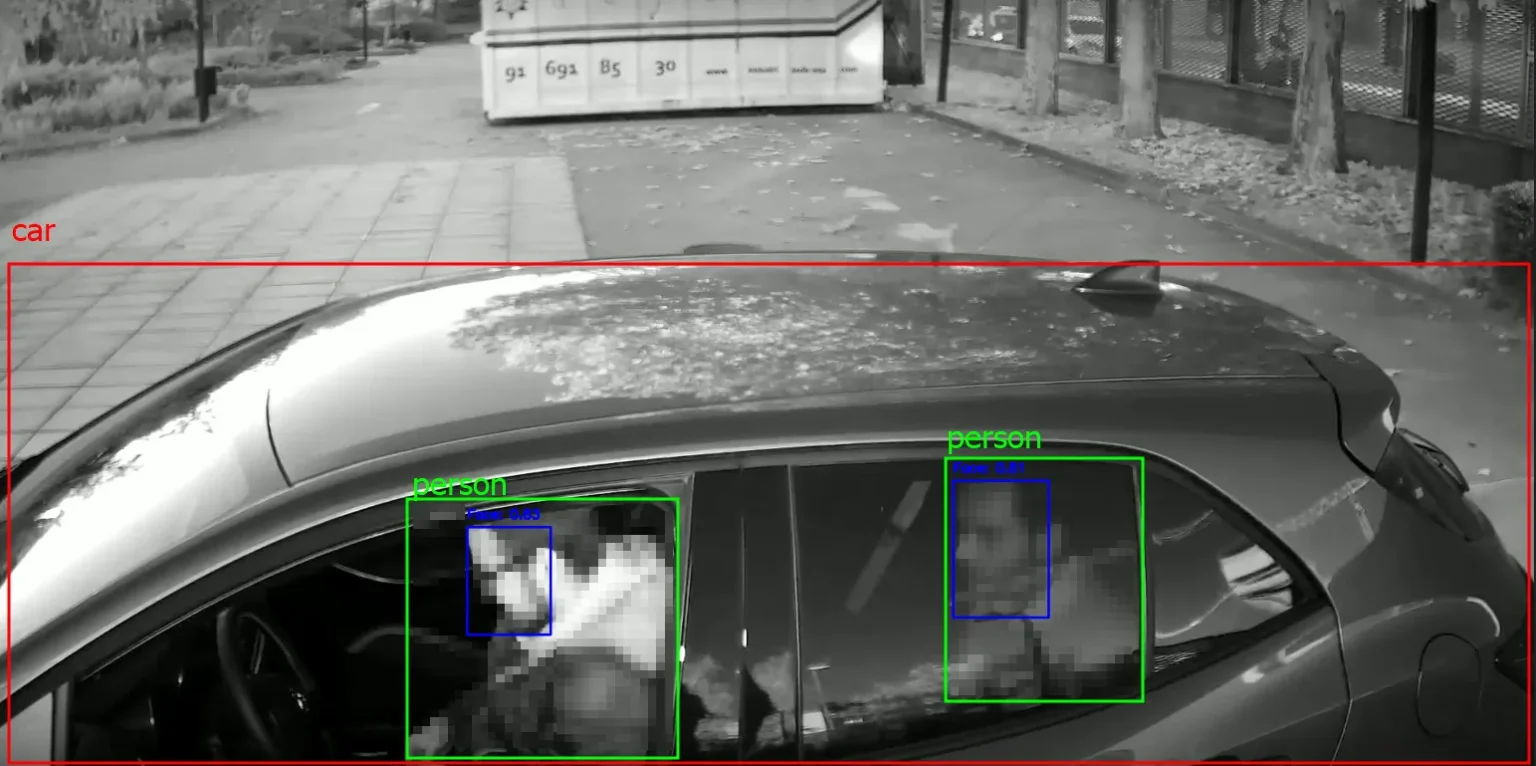
Vehicle occupants, anonymised on board.
There is no need: they are anonymised on the device and alerts or data come out.
On the device itself or at the client's premises; only what is authorised goes to the cloud.
It is designed to make compliance easier; compliance is reviewed in each deployment.
Tell us your case and we will look at it with your data.
Next
Perception